Per-Staff Sales Accountability for Multi-Shift PH Cafes
If your cafe or restaurant runs more than one cashier across morning and closing shifts, you already know the quiet problem: at the end of the day, the sales are in the system, but you cannot always tell who actually served what. One tablet, three people, two shift changes, and a single logged-in account means every order looks like it came from the same person. That fog makes it hard to coach, reward, or trust your numbers.
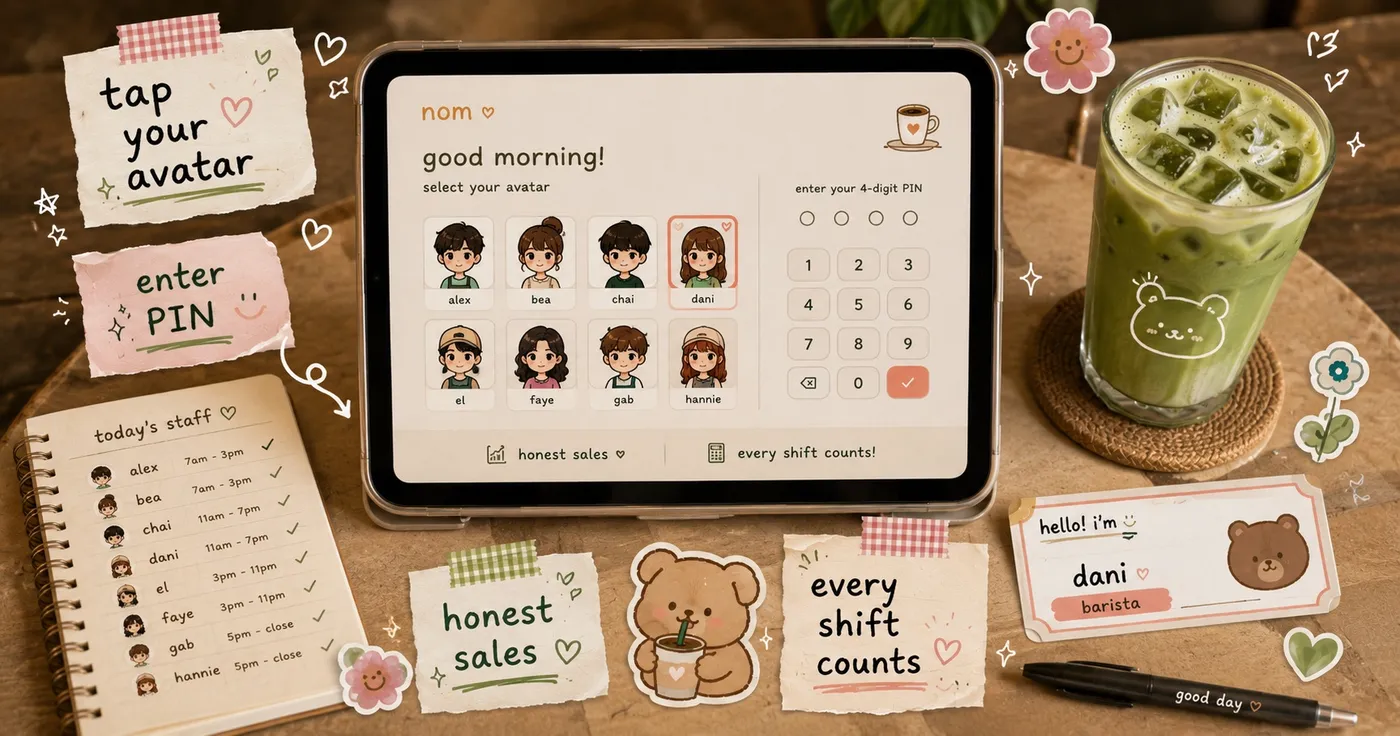
For Philippine cafes and restaurants running multiple staff, Nom's Enterprise tier closes that gap with two things that work together: a per-cashier sales leaderboard so you can see how much each person facilitated, and a shared-counter-tablet account switcher so staff securely become themselves at shift change with a 4-digit PIN. The result is honest attribution on every single order, with zero friction on the floor.
The shared-tablet problem most multi-staff cafes live with
Picture a busy counter in a mall food court. The opening barista logs in at 7am. By lunch, a second cashier takes over while the first goes on break. At 3pm, the closing crew arrives. If everyone shares one logged-in session, every transaction the whole day carries one name, or no name at all.
The usual workarounds are worse than the problem. Logging out and logging back in with a full password at every handover is slow, and during a rush nobody does it. So staff just leave it on whoever opened, and your sales data stops reflecting reality. You lose the ability to answer simple questions: Who handled the most orders during the rush? Who is consistently steady on closing shift? Where did that voided order really come from?
A per-cashier sales leaderboard you can actually trust
The leaderboard gives you a clear, per-staff view of how much each cashier facilitated. Instead of one anonymous daily total, you see the sales attributed to each person who actually served customers, so you can recognize your strongest performers and spot who might need more support.
Concrete ways PH owners use this:
- Recognize the floor, not just the numbers. When you can see who carried the morning rush, you can give credit to the right person instead of guessing.
- Make shift planning evidence-based. If one cashier is consistently strong on closing, you can build your roster around real patterns instead of vibes.
- Coach with specifics. Conversations move from "be faster" to a grounded view of each person's actual activity.
- Tie it to incentives fairly. If you run staff incentives, attribution means rewards go to the people who genuinely earned them.
Because every order is linked to the real person who served it, the leaderboard is only as honest as your login setup. That is exactly why the account switcher matters.
Frictionless shift changes with a 4-digit PIN
The shared-counter-tablet account switcher is built for exactly the moment most systems fall apart: handover. Instead of typing a full password, a staff member taps their avatar on the screen and enters a 4-digit PIN to securely become themselves. No email, no long password, no fumbling during a queue.
Here is how a real shift change looks at the counter:
- The opening barista finishes their shift and steps away from the tablet.
- The next cashier taps their own avatar on the shared device.
- They enter their 4-digit PIN, and the tablet is now theirs.
- Every order from that point is attributed to the real person serving, automatically.
The whole switch takes seconds, which is the point. A handover that is fast enough to do during a lunch rush is a handover that actually gets done. And because it is a PIN rather than a shared password, you keep a clean line between who is responsible for what, without slowing anyone down.
Why honest attribution changes how you run the floor
When every order traces back to the person who served it, a lot of small headaches quietly disappear. A void or a refund is no longer a mystery. A pattern of mistakes can be traced to a shift and addressed kindly and specifically. A great day can be credited to the people who made it happen.
It also protects your team. Shared logins mean shared blame, and that is unfair to the staff who are doing things right. Per-person attribution means accountability cuts both ways: the people doing excellent work get visibly recognized, and issues get pinned to the actual source instead of hanging over the whole crew.
For a single-cashier stall, none of this is necessary, which is why it lives on the Enterprise tier. It is built for cafes and restaurants juggling multiple staff, multiple shifts, and shared counter devices, where the difference between "the tablet's total" and "each person's contribution" is the difference between guessing and knowing.
Built for the way PH cafes actually staff their counters
Most ordering systems assume one device equals one person. Real Philippine cafes do not work that way. You share a tablet, you rotate shifts, you bring in part-timers on weekends, and you need your sales data to survive all of it. Per-staff accountability plus a PIN-based switcher is designed for that reality, so your numbers stay honest from open to close.
If you run a multi-staff cafe or restaurant and you want every order attributed to the real person who served it, this is what Enterprise is for. Explore the owner tools on our business page, or see where it fits on pricing and find the plan that matches how your team actually runs the floor.
Share this article