Cut Ingredient Waste at Your Cafe: A PH Owner's Guide
Every kilo of spoiled produce, every carton of milk that sours before service, every tray of pandesal that goes home with the staff instead of selling, is money you already paid for. For a small cafe running on thin margins, ingredient waste is one of the quietest profit killers there is. The good news: you do not need an expensive inventory system to fix it. A handful of disciplined habits and a clear view of what is selling will do most of the work.
Here is a practical playbook for Philippine cafe owners who want to spoil less, over-order less, and keep more of every peso.
Start With What Actually Sells
You cannot order the right amount of anything until you know what your customers actually buy. Most cafes carry a few hero items that move every day and a long tail of slow movers that sit, age, and get thrown out.
Pull up your sales by item and look for the pattern. If your iced spanish latte outsells your specialty pour-over ten to one, your ordering should reflect that, not an even split across the menu. The slow movers are where waste hides: the niche syrup you bought for one drink, the imported cheese for a sandwich nobody orders, the seasonal fruit that browns before it sells.
With Nom, your analytics show which menu items and modifiers move and which gather dust, so you can buy to demand instead of to habit.
Trim or rework the dead weight
Once you can see the slow movers, you have two honest options: cut the item, or rework it so its ingredients double up elsewhere. The barako you bought for one rarely ordered drink can become the base for a new bestseller. Shared ingredients across several popular items is the single best defence against spoilage, because nothing sits idle waiting for one slow order.
Order Smaller, Order More Often
Bulk buying feels cheaper per unit, but if a third of it spoils, you paid a premium to throw food away. For perishables, milk, fresh produce, pastries, cream, smaller and more frequent orders almost always win for a small cafe.
- Match orders to your real selling days. If weekends are double your weekday volume, order to that rhythm instead of a flat weekly delivery.
- Set a par level per item. Decide the minimum you want on hand, and only order up to it. No more guessing, no more "baka kulangin" over-buying.
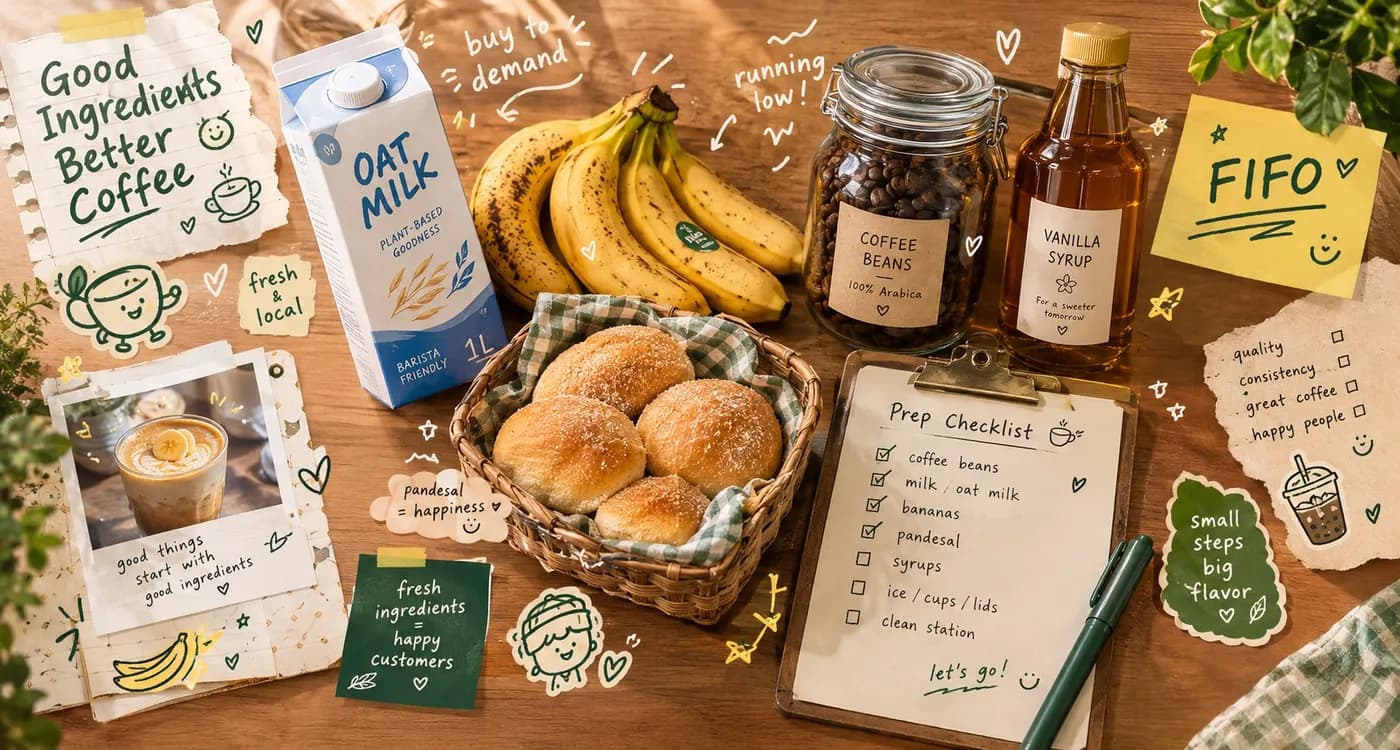
- Track shelf life, not just quantity. A FIFO habit, first in, first out, with the oldest stock pulled forward, prevents the back-of-the-fridge surprise.
Frequent ordering takes a little more coordination, but it turns your supplier into your storage. Let the fresh stock sit on their shelf, not spoil on yours.
Know What Is Running Low Before It Runs Out
Half of over-ordering comes from panic. You run out of oat milk mid-rush, so next time you buy triple, and most of it spoils. The cure is visibility: knowing what is low while there is still time to order calmly.
Build a simple low-stock routine. A whiteboard by the prep station where staff mark anything below par works. Better, tie it to your menu: when an ingredient runs low, toggle the affected drinks to unavailable so customers stop ordering what you cannot make well, and you stop scrambling.
In Nom, your real-time availability toggles let the floor mark an item sold out the moment supply gets tight. Customers ordering by QR simply do not see it, no awkward "sorry po, wala na" at the counter, and no rushed emergency restock that leads to over-buying.
Turn Near-Waste Into Sales
Some waste is unavoidable, the croissant that did not sell by 4pm, the ripe bananas, the day-old loaf. The trick is to sell it before it becomes trash.
- End-of-day bundles. A "merienda rescue" combo of a pastry plus a drink at a small discount moves stock that would otherwise be binned.
- Repurpose into new items. Day-old bread becomes bread pudding or French toast. Overripe bananas become banana bread. Ugly fruit becomes a blended drink.
- Staff and sampling. Hand near-expiry stock to staff or use it for free samples that drive a new sale, far better than the bin.
Promote these through your menu and loyalty perks so customers actively look for them. A cashback or points nudge on an end-of-day bundle clears stock and rewards loyalty at once.
Make Waste Tracking a Daily Habit
What gets measured gets managed. You do not need a spreadsheet degree, just a consistent log. At close, have whoever runs the kitchen jot what got thrown out and why: spoiled, over-prepped, dropped, expired. After two weeks, the pattern is undeniable.
Maybe you always over-prep whipped cream on weekdays. Maybe one supplier's milk consistently turns early. Maybe a slow-moving syrup should just go. The log turns vague frustration into specific, fixable decisions, and each fix is margin recovered.
Pair the waste log with your sales data and you close the loop: sell what moves, stop ordering what does not, and catch spoilage before it repeats.
Small Habits, Real Margin
Cutting ingredient waste is not about one big change, it is a stack of small disciplines: order to demand, buy small and often, see low stock early, rescue near-waste into sales, and log what you bin. None of it requires new hardware or a big spend. Most of it just requires a clear view of what is happening in your cafe day to day.
That clear view is exactly what Nom is built to give Philippine cafe owners, sales analytics, live menu control, loyalty tools, and a floor that runs in sync, with no commission per order and no lock-in. See how it fits your cafe on our business page, or check the pricing to start protecting your margins today.
Share this article